



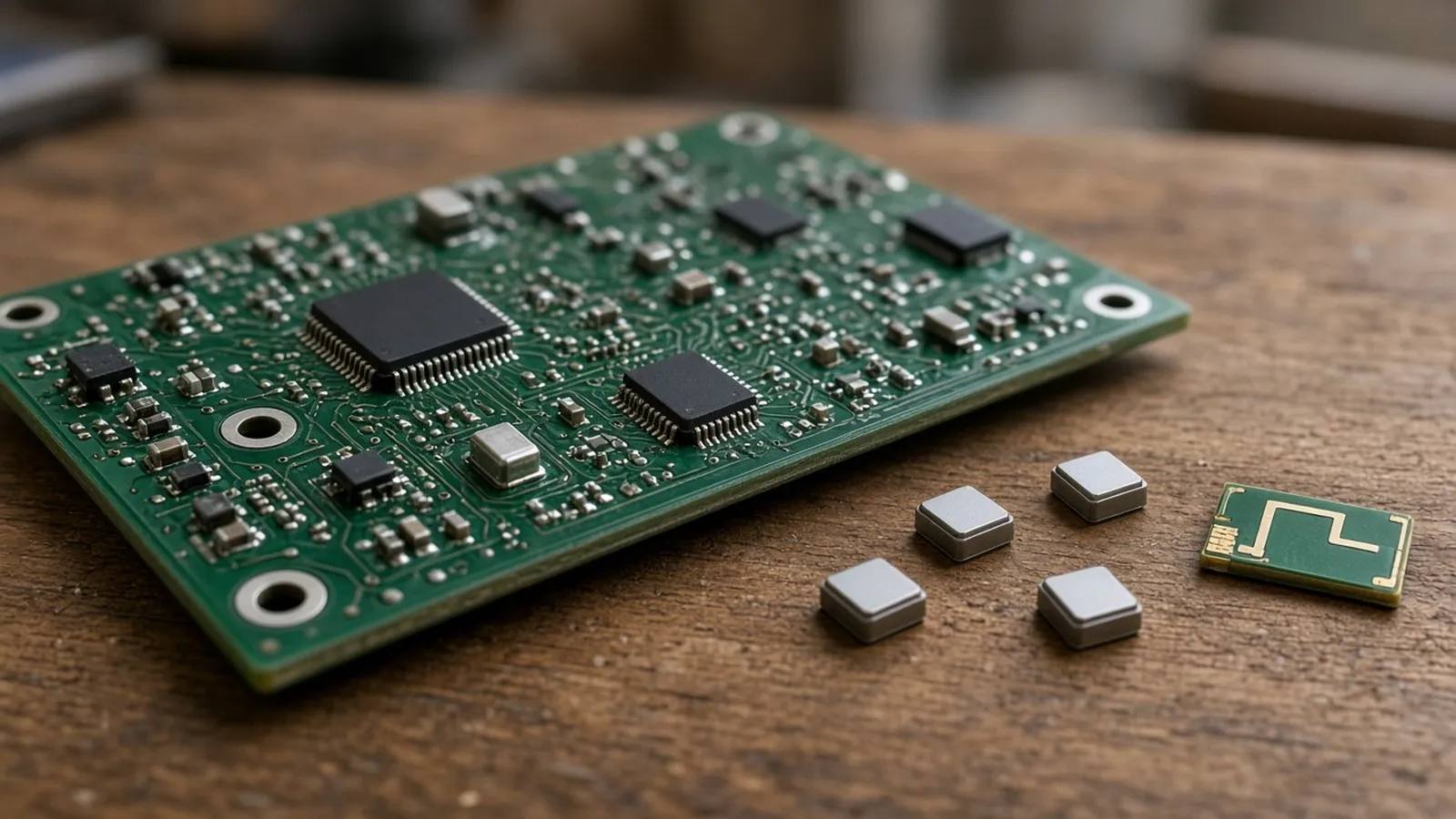
Short answer: pick an Espressif ESP32 part when your product lives on home Wi-Fi, and look at Nordic's nRF52840 or nRF54L15 or Silicon Labs' EFR32MG24 when it runs on a battery and talks Bluetooth LE, Thread or Zigbee. Some newer Espressif parts blur the line by adding an 802.15.4 radio. Every figure below comes from the vendor's own product page, as of October 16, 2026. We don't quote prices, because they change.
Spec table
| ESP32-C6 | ESP32-S3 | ESP32-H2 | nRF52840 | nRF54L15 | EFR32MG24 | |
|---|---|---|---|---|---|---|
| Vendor | Espressif | Espressif | Espressif | Nordic Semiconductor | Nordic Semiconductor | Silicon Labs |
| Core | 32-bit RISC-V up to 160 MHz, plus low-power RISC-V up to 20 MHz | Dual-core Xtensa LX7, 240 MHz | Single-core 32-bit RISC-V | Arm Cortex-M4 with FPU, 64 MHz | Arm Cortex-M33, 128 MHz, plus RISC-V coprocessor | Arm Cortex-M33, up to 78 MHz |
| Memory | 512 KB SRAM, 320 KB ROM, external flash | 512 KB internal SRAM | 320 KB SRAM, 2 or 4 MB SiP flash | 1 MB flash, 256 KB RAM | 1.5 MB NVM, 256 KB RAM | Up to 1536 kB flash, up to 256 kB RAM |
| Wi-Fi | 2.4 GHz Wi-Fi 6 (802.11ax), plus b/g/n | 2.4 GHz 802.11 b/g/n | No | No | With an nRF70 Series companion IC | No |
| Bluetooth LE | Bluetooth 5 (LE) | Bluetooth 5 (LE) | Bluetooth 5 (LE) | Yes, plus Bluetooth mesh | Yes, plus Channel Sounding and mesh | Yes (Bluetooth 6.0), plus mesh |
| 802.15.4 (Thread, Zigbee) | Yes | No | Yes | Yes | Yes | Yes |
| Max TX power | Not stated on product page | Not stated on product page | Not stated on product page | +8 dBm | +8 dBm (CSP), +7 dBm (QFN) | Up to 19.5 dBm |
Table based on: ESP32-C6, ESP32-S3, ESP32-H2, nRF52840, nRF54L15 and EFR32MG24 product pages, all as of Oct 16, 2026. Values are for the families as listed; check the exact part number before you lay out a board.
ESP32 vs nRF52840 and EFR32: Wi-Fi SoCs vs 802.15.4 and Bluetooth LE SoCs
The original ESP32 is described by Espressif as an MCU with integrated Wi-Fi and Bluetooth that can run standalone or act as a Wi-Fi and Bluetooth co-processor for a host MCU over SPI, SDIO, I2C or UART, rated for -40°C to +125°C (as of Oct 16, 2026). That co-processor option is worth remembering if your main MCU is already chosen.
Nordic and Silicon Labs approach from the other side. The nRF52840 supports Bluetooth LE, Bluetooth mesh, Thread, Zigbee, 802.15.4, ANT and proprietary 2.4 GHz stacks with full protocol concurrency, and the EFR32MG24 is pitched at mesh IoT using Matter™, OpenThread and Zigbee for smart home, lighting and building automation (both as of Oct 16, 2026).
Q: ESP32 vs nRF52840: which should I use?
Use an ESP32 family part when your device joins home Wi-Fi directly, and use the nRF52840 when you need Bluetooth LE, Thread or Zigbee on a small battery budget. The nRF52840 has no Wi-Fi radio, and Espressif lists only Wi-Fi and Bluetooth for the classic ESP32, so the network your product joins usually decides for you.
If you need both, there are two routes in the vendors' own docs: Espressif's ESP32-C6 combines Wi-Fi 6, Bluetooth LE and 802.15.4 on one chip (Espressif), and Nordic says the nRF54L15 supports Wi-Fi with an nRF70 Series companion IC (Nordic), both as of Oct 16, 2026.
Q: Does the ESP32 support Thread?
Some ESP32 parts support Thread and some don't. Espressif lists an 802.15.4 radio, the radio Thread runs on, for the ESP32-C6 and ESP32-H2, and says both can build Matter Thread end devices. The ESP32-S3 and the classic ESP32 list only Wi-Fi and Bluetooth, so they need a separate 802.15.4 radio for Thread.
That's per Espressif's ESP32-C6, ESP32-H2, ESP32-S3 and ESP32 pages, as of Oct 16, 2026. If you already have an ESP32 board on the bench, check the exact part before you plan a Thread product around it.
Q: Which chipsets support Matter?
All the vendors in this guide offer Matter-capable parts, according to their own pages as of Oct 16, 2026: Espressif's ESP32-C6 and ESP32-H2, Nordic's nRF52840 and nRF54L15, and Silicon Labs' EFR32MG24. A Matter-capable chip is a starting point, not a certified product.
Espressif says the ESP32-C6 lets customers build Matter Wi-Fi and Thread end devices, and that the ESP32-H2 can build Matter Thread end devices or, paired with an Espressif Wi-Fi SoC, a Thread border router or Matter-Zigbee bridge (ESP32-C6, ESP32-H2). Nordic's comparison table marks Matter "Yes" for the nRF52840 (Nordic), and Silicon Labs lists Matter under EFR32MG24 protocol support (Silicon Labs), all as of Oct 16, 2026.
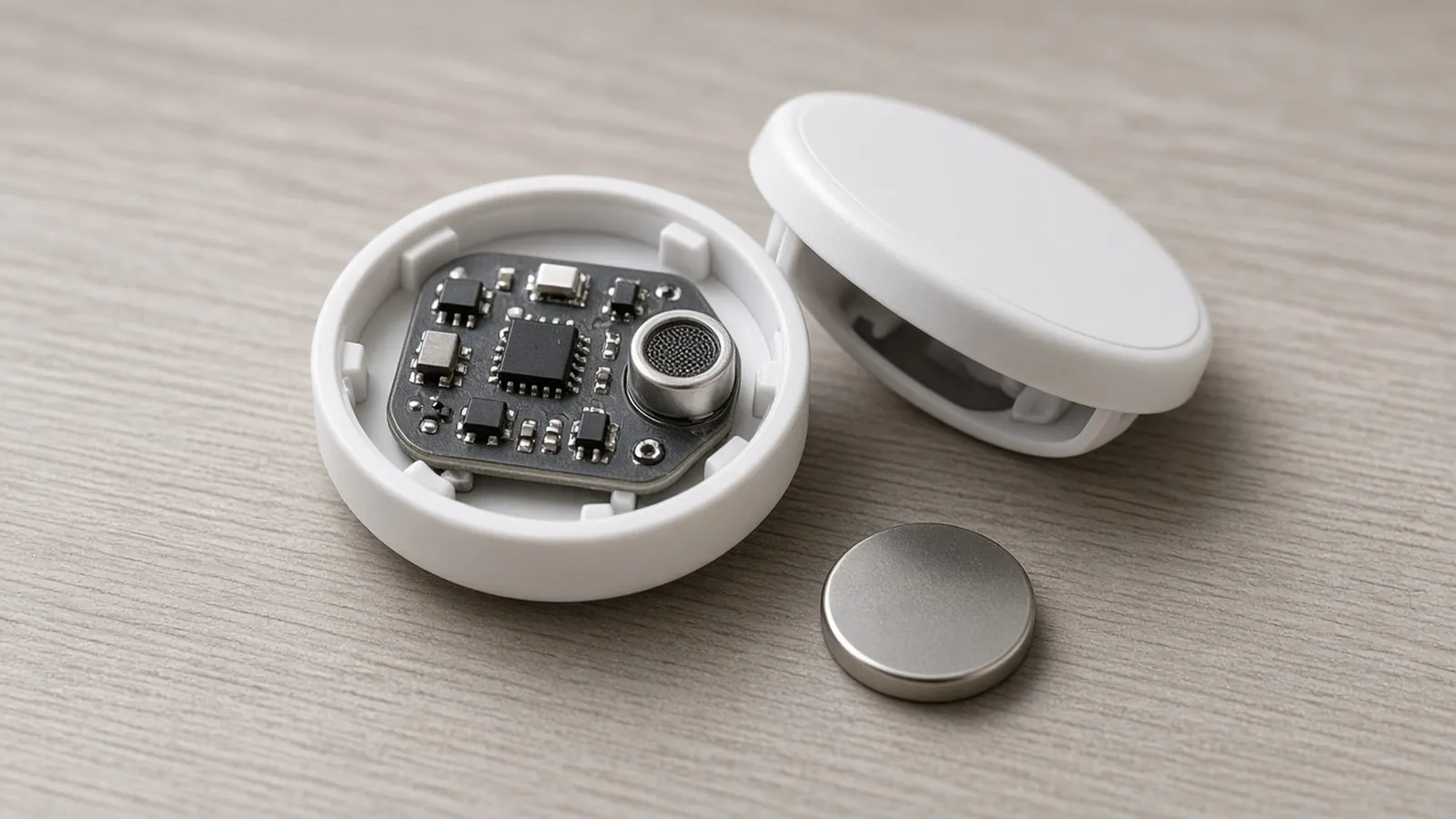
Power and battery life: nRF54L15 and EFR32MG24 currents
Only Nordic and Silicon Labs publish radio currents on the product pages we checked, so that's all we quote. Conditions matter, so they're included.
- nRF54L15: 3.4 mA RX and 4.8 mA TX at 0 dBm, and sleep modes from 0.7 μA to 2.9 μA, all at 3 V (Nordic, as of Oct 16, 2026). Nordic also says the nRF54L Series doubles the nRF52840's processing power while tripling processing efficiency.
- EFR32MG24: 4.4 mA RX (1 Mbps GFSK), 5.1 mA RX (250 kbps OQPSK DSSS), 5 mA TX at 0 dBm, 19.1 mA TX at 10 dBm, 156.8 mA TX at 19.5 dBm, and 1.3 μA in EM2 deep sleep with 16 kB RAM retention and the RTC running (Silicon Labs, as of Oct 16, 2026).
- ESP32-C6: Espressif doesn't give currents on the product page, but notes that Wi-Fi 6 Target Wake Time lets customers build battery-operated connected devices that stay connected (Espressif, as of Oct 16, 2026). Check the datasheet for current figures.
Notice the EFR32MG24 jump from 5 mA to 156.8 mA as TX power rises. Range is not free, and the battery is the one paying.
OTA updates and security features
Each product page lists hardware security features, as of Oct 16, 2026:
- ESP32-C6: RSA-3072 secure boot, AES-128/256-XTS flash encryption, digital signature, an HMAC peripheral and a Trusted Execution Environment (Espressif).
- ESP32-H2: ECC-based secure boot, AES-128/256-XTS flash encryption, ECDSA digital signature and an HMAC peripheral (Espressif).
- ESP32-S3: AES-XTS flash encryption, RSA-based secure boot, digital signature, HMAC and a "World Controller" for two isolated execution environments (Espressif).
- nRF54L15: secure boot, secure firmware update, secure storage, TrustZone, a cryptographic accelerator, side-channel leakage protection and tamper detectors; Nordic adds that nRF Cloud supports device management and FOTA (Nordic).
- nRF52840: Arm TrustZone CryptoCell and 128-bit AES CCM (Nordic).
- EFR32MG24: Secure Vault, secure boot, secure debug unlock, anti-tamper, secure attestation, PUF-based key management and a TRNG (Silicon Labs).
Secure boot and a signed OTA path are the pair to plan together. One without the other is a lock with the key taped to the door.
Q: Which chip is best for OTA firmware updates?
There is no single best chip for OTA firmware updates; what matters is that the part supports secure boot and that you plan flash space for the update image. Among these, Nordic explicitly lists secure firmware update and FOTA through nRF Cloud for the nRF54L15, and secure boot is listed for every part here except the nRF52840.
Memory is the practical constraint. A part with 1 MB of flash, like the nRF52840, or external flash, like the ESP32-C6, shapes how big your firmware and update scheme can be (vendor pages as of Oct 16, 2026).
What this means for your post-purchase app
The chipset decides how your device joins the home network, and that decides what the first minutes of setup look like for the customer. It also decides whether you can ship fixes later through OTA updates, and how much room those updates have. Copilot.cx works on the app side of that experience with the Setup Engine. For the app and backend side of device data, see our post on adapting Firebase for IoT devices, and for common launch mistakes, 9 ways to screw up your first smart product.
FAQ
ESP32 vs nRF52840: which should I use?
Use an ESP32 family part when your device joins home Wi-Fi directly, and use the nRF52840 when you need Bluetooth LE, Thread or Zigbee on a small battery budget. The nRF52840 has no Wi-Fi radio, and Espressif lists only Wi-Fi and Bluetooth for the classic ESP32, so the network your product joins usually decides for you.
Does the ESP32 support Thread?
Some ESP32 parts support Thread and some don't. Espressif lists an 802.15.4 radio, the radio Thread runs on, for the ESP32-C6 and ESP32-H2, and says both can build Matter Thread end devices. The ESP32-S3 and the classic ESP32 list only Wi-Fi and Bluetooth, so they need a separate 802.15.4 radio for Thread.
Which chipsets support Matter?
All the vendors in this guide offer Matter-capable parts, according to their own pages as of Oct 16, 2026: Espressif's ESP32-C6 and ESP32-H2, Nordic's nRF52840 and nRF54L15, and Silicon Labs' EFR32MG24. A Matter-capable chip is a starting point, not a certified product.
Which chip is best for OTA firmware updates?
There is no single best chip for OTA firmware updates; what matters is that the part supports secure boot and that you plan flash space for the update image. Among these, Nordic explicitly lists secure firmware update and FOTA through nRF Cloud for the nRF54L15, and secure boot is listed for every part here except the nRF52840.