
Every few weeks someone asks me: "Should we track NPS, CSAT, or CES?" Usually it's a product lead who just inherited a dashboard with all three, and none of them agree.
My honest answer is "yes, but for different jobs." My slightly less polite answer is "it matters less which one you pick than when you ask it, and who gets the question." Let's do the polite part first.
The 60-second definitions
NPS (Net Promoter Score) measures loyalty. The standard question is "How likely are you to recommend us to a friend or colleague?" with answers from 0 to 10. People who pick 9 or 10 are promoters, 7 or 8 are passives, and anything from 0 to 6 makes them a detractor. Subtract the detractor percentage from the promoter percentage and you get a score somewhere between -100 and +100.
CSAT (Customer Satisfaction Score) measures how happy someone is with a specific thing, right now. The classic version asks people to rate their overall satisfaction with the product or service they received, on a 1 to 5 scale. CSAT is usually the share of people who picked 4 or 5.
CES (Customer Effort Score) measures how hard you made someone work to get something done: fix an issue, finish a purchase, get an answer. A typical version asks how easy it was to deal with you, on a scale from very easy to very difficult. The idea goes back to 2010, when a large study of customer service interactions found that making things easy does more for loyalty than going above and beyond to delight people.
The friendly comparison
Here's how I think about the three, in plain terms:
| NPS | CSAT | CES | |
|---|---|---|---|
| What it asks about | The whole relationship | One moment or thing | One task |
| Time horizon | Long term | Here and now | Right after the task |
| Best at | Spotting fans and future churners | Rating a specific touchpoint | Finding friction |
| Weak at | Telling you why | Seeing the big picture | Anything outside that one task |
CSAT is a here-and-now reaction to one moment, while NPS asks people to step back and think about the whole relationship. CES only covers a single touchpoint, which is why it works best paired with NPS.
So, which one tells you what to fix? Short version:
- CES tells you where it hurts.
- CSAT tells you how much a specific moment hurts.
- NPS tells you whether the hurt is turning into lost fans.
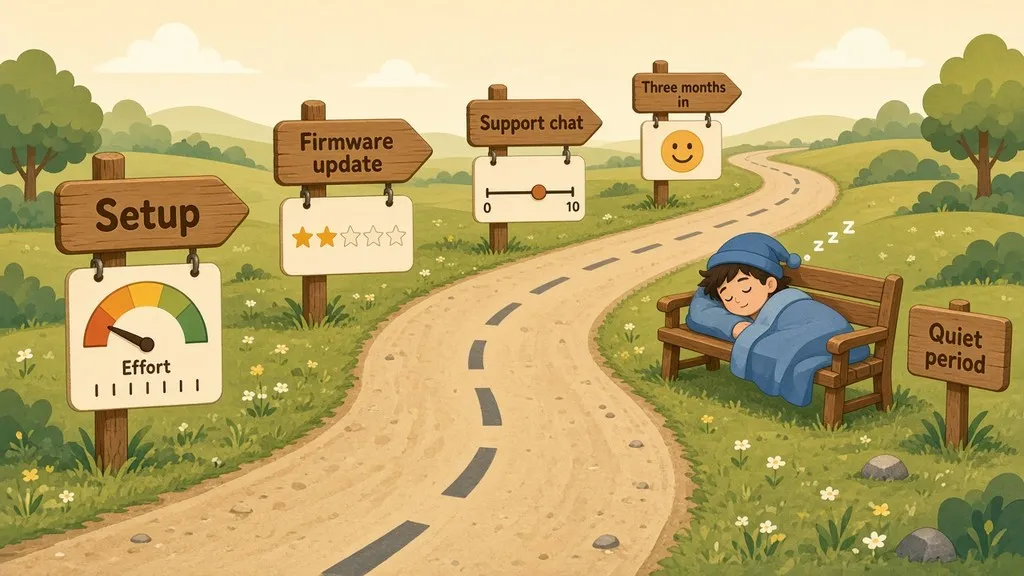
With a connected product, those "moments" keep coming long after the sale: setup, the first firmware update, the first support chat, the first time it drops offline. Each one has a right score and a right time to ask.
Sample survey questions you can steal
Keep each survey to one or two questions. Always add an open "why" question, because the comment is where the actual fix lives.
NPS survey questions
- "How likely are you to recommend [Product] to a friend or family member?" (0 to 10)
- Follow up: "What's the main reason for your score?"
- For detractors: "What's one thing we could change to make this better?"
- For promoters: "What do you love most about it?" (Then listen. With permission, those answers can become your best testimonials.)
CSAT questions
- After setup: "How satisfied are you with setting up your [Device]?" (1 to 5)
- After a firmware update: "How satisfied are you with the latest update?" (1 to 5)
- After a support chat: "How satisfied are you with the help you got today?" (1 to 5)
CES questions
- After pairing: "How easy was it to connect [Device] to your Wi-Fi?" (very easy to very difficult)
- After using a feature: "How easy was it to create your first schedule?"
- An agreement-style version: "[Brand] made it easy for me to solve my problem." (strongly disagree to strongly agree)
Where each score breaks on a connected product
A regular product has one big moment: the purchase. A connected product has a whole lifecycle of them. That's great for feedback, but each score breaks in its own way if you ask at the wrong moment, or only ask the people who are easy to reach.
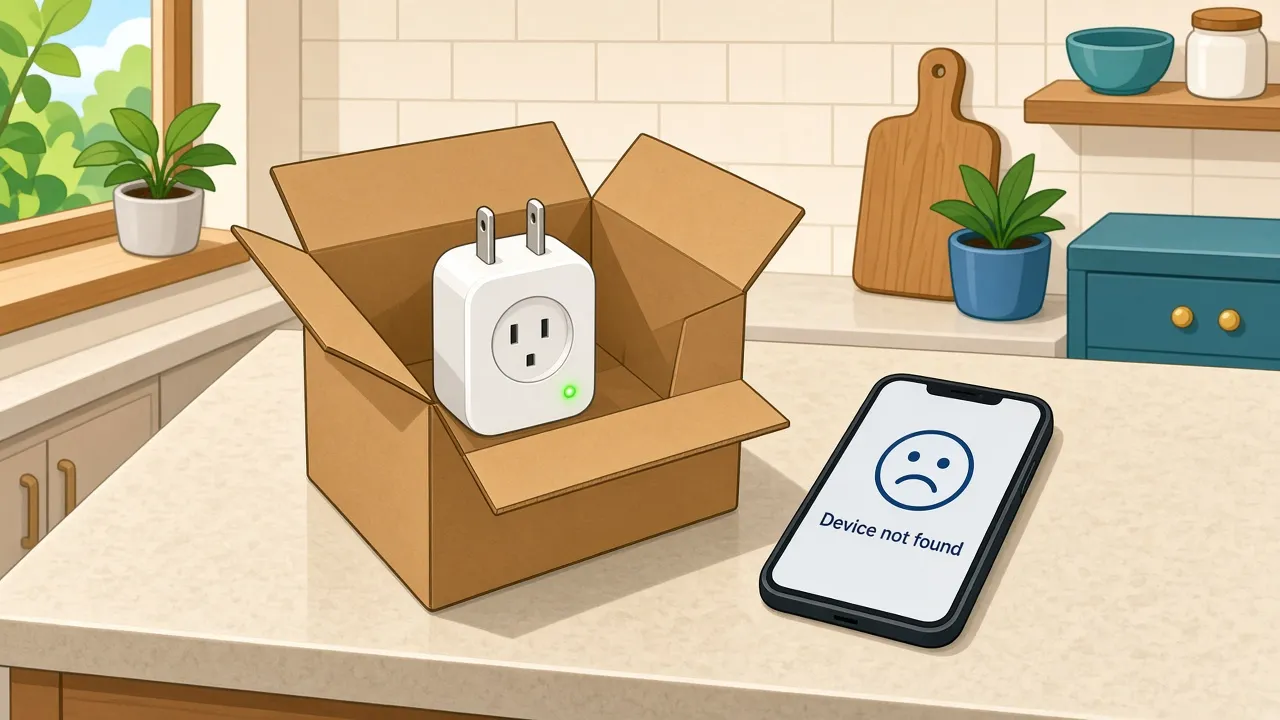
CES after setup: the people who gave up never see the survey
If your CES question pops up when pairing succeeds, you're only hearing from the people who made it. The ones who gave up at the Wi-Fi step never reach that screen. That's survivorship bias, and it flatters your score exactly where you most need the truth.
And setup is where the trouble is. Industry research suggests more than half of people who install smart home devices themselves run into problems, and connectivity is the one they mention most.
CES works best right after the interaction or touchpoint you're asking about. On a connected product, a failed pairing attempt is a touchpoint too. So ask a short effort question on the failure path as well, for example after a third retry or when someone taps "Help."
CSAT after a firmware update: ask the people who noticed
Firmware updates are a great CSAT moment, with one catch: many of them install quietly in the background. Ask everyone "How satisfied are you with the latest update?" and you'll hear from people who have no idea anything changed. Ask the users who actually saw the release note, opened the new feature, or hit the changed screen.
CSAT also has a built-in response bias: the people who bother to answer tend to be the ones who had a very good or a very bad experience. A small group that really experienced the change beats a big group that's guessing.
NPS in the app: you only hear from people still opening it
NPS is supposed to measure the whole relationship. But if you only ask inside the app, you only hear from people who still open the app. The customer whose camera went offline in week three and never came back is exactly the detractor you need to hear from, and they will never see an in-app prompt. Send NPS by email too.
Give it some time, as well. Asking someone how likely they are to recommend a robot vacuum 40 seconds after unboxing is like asking for a restaurant review while they're still reading the menu. Survey vendors typically suggest waiting about 7 to 10 days after purchase for a product that has to ship, and running relationship surveys about quarterly. The same logic works for CSAT on anything people use for a long time: give them a few days or weeks first.
One more reason to watch the setup moment: it seems to echo into loyalty. One 2025 industry survey found that professionally installed smart cameras earn an NPS of 49, compared with 41 for self-installed ones. Same kind of product, a different first hour, and a higher score. That's a correlation, not proof, but it points the same way.
The whole lifecycle: survey fatigue adds up
Put all of this together and one owner could get a pairing survey, an update survey, a support survey, and an NPS email in the same month. That's how you lose them.
One paper on survey fatigue in health research lists over-surveying as a common cause and links fatigue to careless answers and fewer responses. Even companies that sell NPS software warn that sending relationship surveys more often than quarterly raises the risk of fatigue, especially if you're also sending surveys after individual interactions. My rule of thumb: one survey per person at a time, then a quiet period.
A simple way to combine them
Starting from scratch? Here's a setup I like:
- CES at the friction points, including the failures. Right after setup, pairing, and support contacts, and on the failed-pairing path too.
- CSAT at the moments that change, for the people who noticed. After firmware updates and new feature launches, asked only of users who saw the change.
- NPS on a steady rhythm, in more than one channel. After people have lived with the product for a while, then about quarterly, by email as well as in the app.
- One survey at a time. Keep one shared survey calendar so the setup, support, and product teams aren't all asking the same person in the same week.
- Close the loop. Tell people what changed because of their answers, and do it quickly. People keep answering when they can see their feedback actually led somewhere.

The takeaway
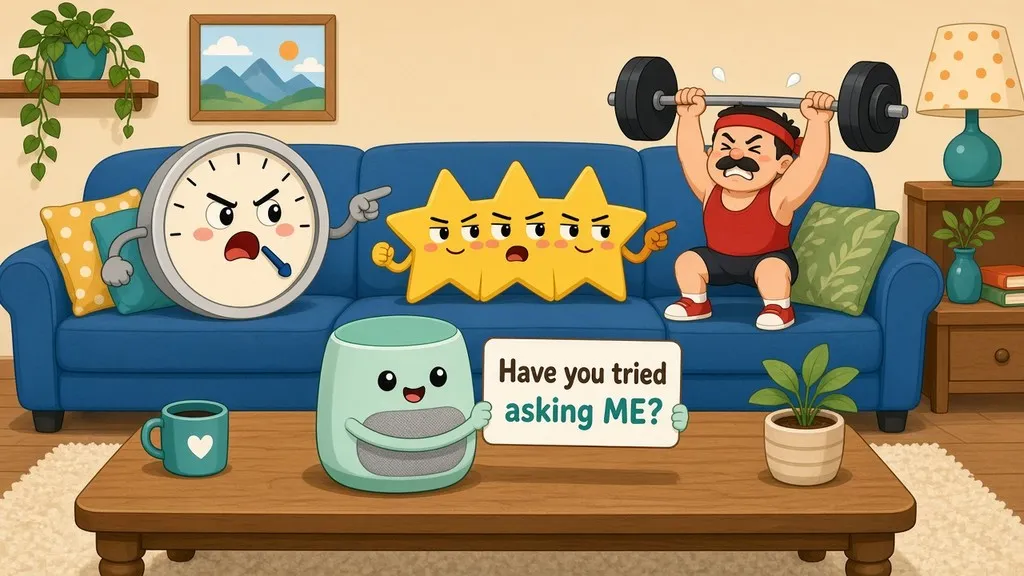
NPS, CSAT, and CES aren't rivals. They answer different questions: Will they recommend us? Did they like that moment? Was that hard? For connected products, the most useful questions come before all three: when should I ask, and who haven't I heard from yet?
And if your dashboard currently shows three scores that disagree with each other, congratulations. They're probably all right, just about different moments.
If you want to go one level deeper, we first wrote about segmenting NPS in 2020, and the hands-on how-to is in NPS Segmentation, Revisited.