
A few years ago, "subscription" for a hardware brand mostly meant a camera cloud plan. Today every connected product roadmap seems to have a recurring line item: video history, monitoring, premium AI, even "hardware as a service" bundles that trade a lower sticker for a monthly fee.
That can be a healthy business. It can also earn a one-star review that starts with the word "hostage."
Owners will pay for some subscriptions and resent others, and the hard part is knowing which is which. Here's how I'd sort them, for product, customer experience (CX), and marketing leaders at consumer electronics, smart home, and IoT brands.
What people are already paying for (and what they skip)
Start with what owners already pay for.
Recent industry surveys of US internet households found that a little more than half of smart home device owners pay no subscription fees tied to their devices, systems, or appliances. Security leads the paid side: roughly 4 in 10 owners pay for a home security system service, about 1 in 5 pay for a video device service, and a similar share pay for network, privacy, or cybersecurity add-ons. Premium AI voice assistants show up at roughly 1 in 6 owners.
Zoom into smart video and the picture changes. Industry research finds that a large majority of smart video owners already pay for a related service. Video doorbells often see paid attach rates around two thirds, and average cloud spend sits in the low teens of dollars per month.
So the device subscription model works, when the service solves a problem the hardware alone can't.
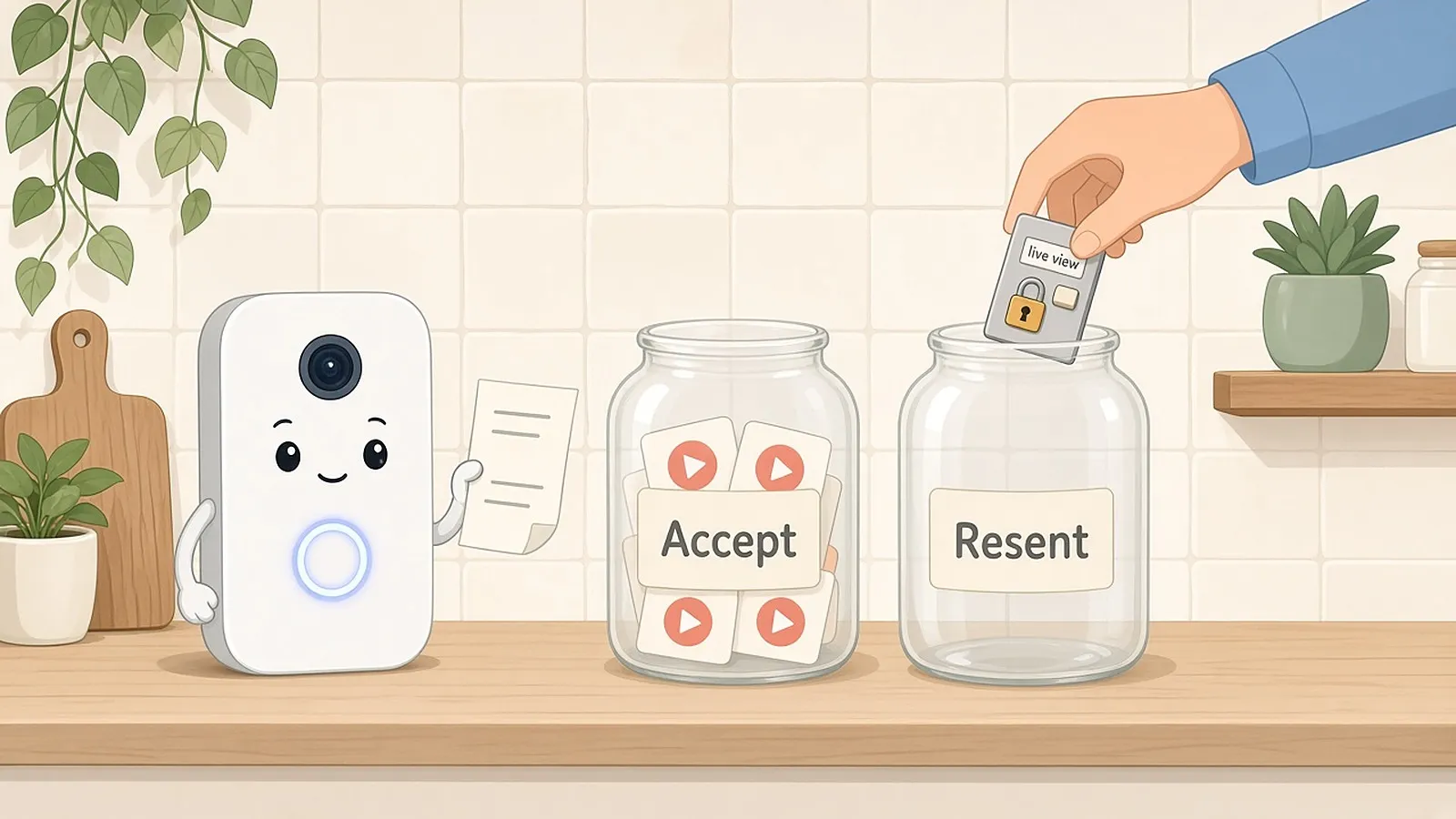
Subscriptions owners tend to accept:
- Cloud video history and event storage. The camera still works without it. The paid plan keeps the clip you need when a package disappears.
- Professional monitoring and emergency response. Someone is actually watching or ready to call for help. That's ongoing work a person does every month.
- Meaningful AI that reduces noise. Person vs. package vs. squirrel. Industry work on alert quality has found Net Promoter Scores in the 60s when notifications feel helpful, and in the 30s or 40s when they feel like noise.
- Proactive home services. Leak detection, HVAC or fire-safety monitoring, home tech support. A 2025 study of single-family homeowners found about two thirds were likely to adopt at least one, and most interested households were willing to pay $10 to $30 per month.
Subscriptions owners tend to resent:
- Basic live view or core controls locked behind a paywall. If the box promised "see who's at the door," charging extra just to open live view feels like a second purchase.
- Features that used to be free, then moved behind a paywall. Grandfathering existing owners keeps the trust that sold them the device in the first place.
- Anything that appears before the device even works. More on timing below.
- A pile of overlapping plans. Camera cloud plus AI plus monitoring plus "premium support," each with its own renewal date.
A separate 2026 consumer survey put the pricing ceiling in plain numbers: almost 3 in 10 wanted no monthly fee at all, about 1 in 4 picked a ceiling of up to $10 a month, and only a small share would consider more than $20. Framing helps. Nearly half said they would be more willing to pay a monthly fee if it reduced or eliminated the upfront device cost. In other words, hardware as a service: lower the sticker and make the monthly fee feel like the way in.
Subscription fatigue is already in the house
Your camera plan competes with streaming, meal kits, cloud storage, and whatever else hit the card last month.
A 2026 survey of US adults found the average respondent kept about 3.4 active paid subscriptions, and nearly 3 in 5 had at least one paid plan unused in the past 30 days. Smart home owners also say the stack is hard to manage: roughly a third find devices confusing to set up or use, and about half want one place to see what's connected and working. In a 2026 home security survey, about 6% of users said rising costs led them to cancel or downgrade a paid plan in the past year, with younger users and renters more likely to cut.
Every renewal is an audition. If the owner can't remember what the plan did this month, cancel starts looking friendly.
When to offer the plan (hint: not at unboxing)
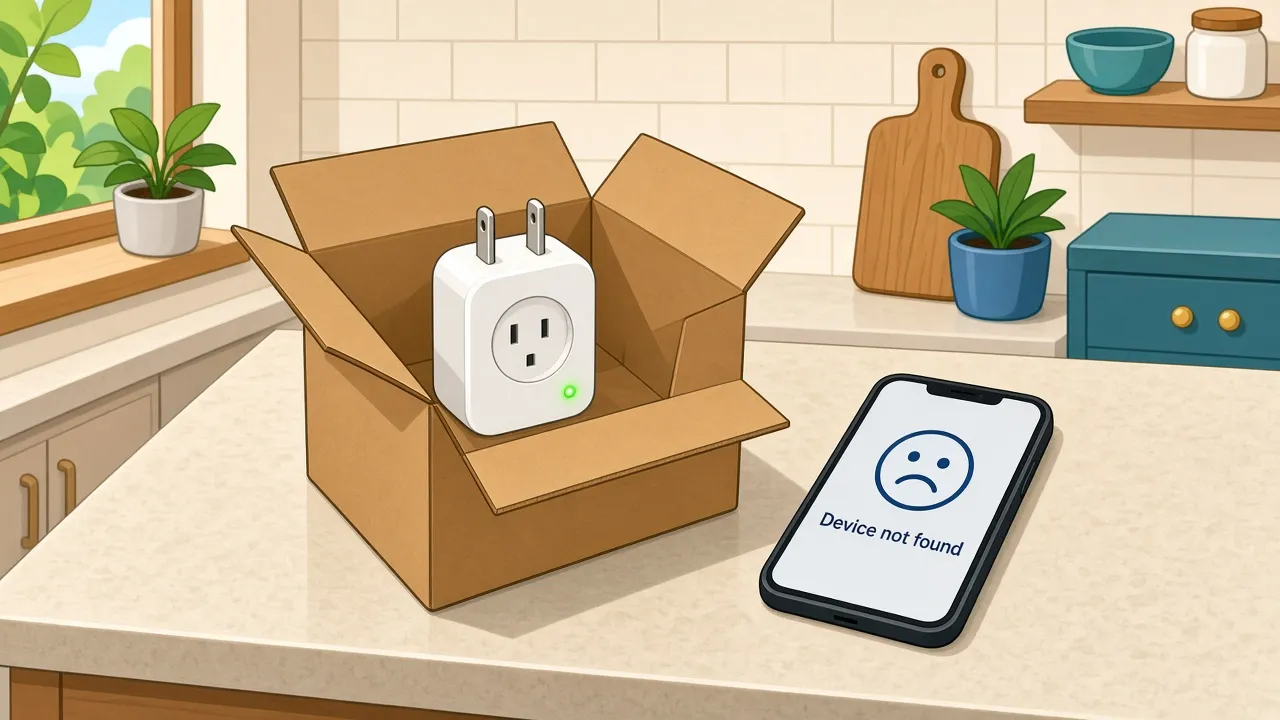
I still see setup flows that pop a premium paywall before Wi-Fi pairing finishes. That's like asking for the dessert order while someone is still looking for a table.
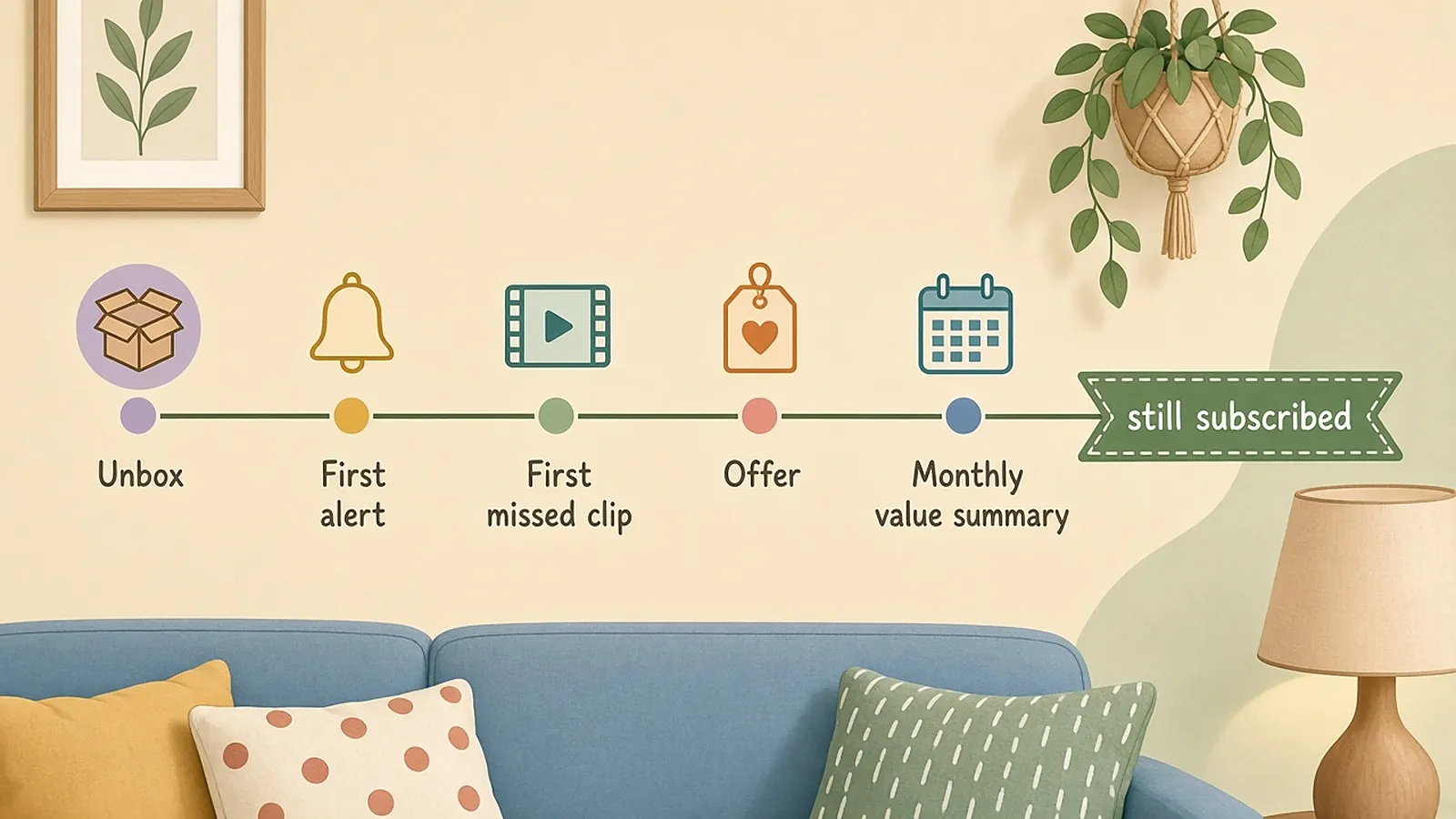
Offer the plan around a real moment of value:
- After first successful setup. The device is online and the owner feels competent. Now explain what the paid plan adds.
- After the first "I wish I had that clip" moment. Live view during a delivery, or a scroll back that finds nothing stored. Video history is easy to explain at that moment.
- After a week of noisy alerts. If the free tier is buzzing with false motion, a smarter filter feels like a favor.
- When storage is about to fill, or a trial is ending. Show what they used ("12 events saved this week") before you ask them to keep paying.
- When they add a second device. Multi-camera homes have a clearer reason for a household plan than a single indoor cam.
What to avoid: asking for a card before the product has done the thing on the box; hiding cancel or downgrade (people commit more readily when they know leaving is easy); and treating every new user the same. Someone who never opened event history is a bad storage upsell. Someone who checks the feed three times a day is a great one.
Here's a made-up example (not a real customer): a doorbell brand waits until day four, after two delivery alerts, then shows "Keep the last 30 days of events, one tap." That beats the day-zero paywall during Wi-Fi setup, because the owner already felt the gap.
If you want a longer look at turning a one-time camera sale into ongoing value, I wrote about that shift in From One-Time Sales to Lifetime Value.
How to reduce customer churn on device subscriptions
Getting the signup is only half the device subscription model. Keeping it pays for the cloud bill.
- Make the free product sufficient. Deliver the promise that sold the device. Sell ongoing work beyond that promise (history, monitoring, analysis, maintenance).
- Show value used, on a rhythm. "Your plan saved 47 events and filtered 120 false alerts this month" beats "Your subscription renews tomorrow."
- Improve the daily touchpoint. For cameras, that's the alert. Better relevance is one of the clearest loyalty levers in recent smart video research.
- Onboard into the paid features. A subscriber who never opens event history is a churn risk. A short "here's what your plan includes" flow in week one matters as much as checkout.
- Be honest about cancel and downgrade. Offer a lower tier or a pause before a full cancel. Trapping people trains them to warn their friends.
- Watch behavior as closely as billing. Unused storage, repeated "manage plan" visits, and noisy alerts are early churn signals. Help or re-fit the plan before the cancel page talks.
- Don't sunset features people already had. If the model has to change, grandfather existing owners.
At least one leading camera subscription brand publicly reports average customer tenure of more than seven years. That kind of retention comes from a plan owners keep finding new reasons to use.
A quick checklist before your next release
- Does the hardware still fulfill the box promise with no plan attached?
- Can you name the ongoing work the plan does in one sentence a tired parent would understand?
- Does the first offer wait until after a moment of value, once setup is done?
- Do you show value used before each renewal, and is cancel or downgrade clear?
- Are you targeting by behavior (used history, second device, noisy alerts) instead of blasting everyone on day one?
Setup friction and early returns are a related story. If the first minutes are broken, no subscription pitch will land. We dig into that in No Fault Found Returns.
The takeaway
Smart home subscriptions work when they feel like help, and fail when they feel like a toll booth on a road the owner already paid to drive. Owners will fund video history, monitoring, smarter alerts, and proactive home care. They push back on paywalled basics, surprise feature removals, and offers that interrupt setup.
Look at when your subscription offer appears in your own setup flow this week. If it shows up before the device has done anything useful, move it. If renewals arrive with no reminder of value delivered, add one.
And if you'd rather trigger those offers from real usage instead of a fixed timer, that's the job our Subscription Engine was built for: behavior-based subscription campaigns and a one-tap in-app path so the plan is easy to start when the moment is right.